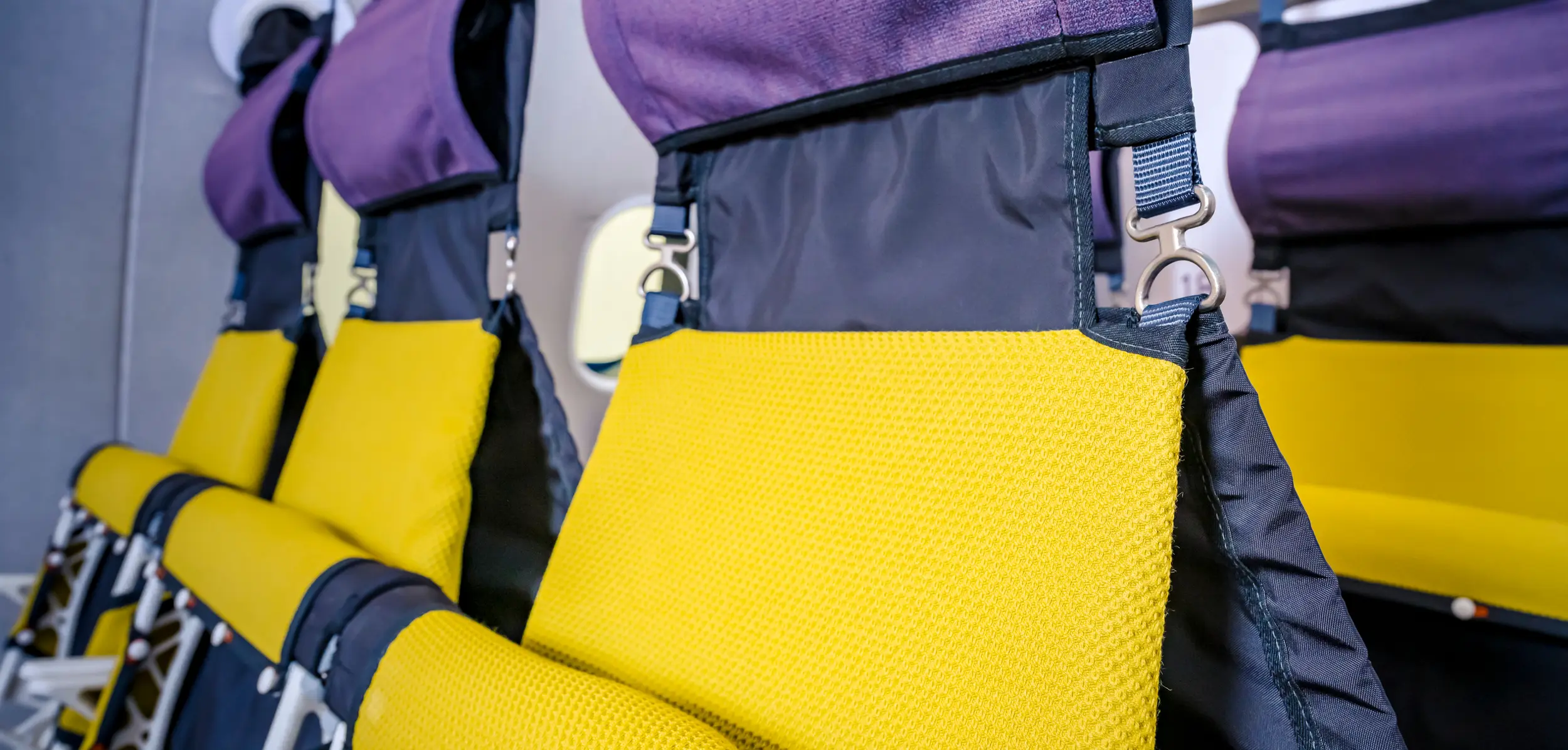
More than lightweight: FairCraft rethinks aircraft interiors with sustainability and circularity at the core.
Our resource strategy is built around reducing material use, extending product life and enabling repair, separation, and recycling. The goal is to minimize waste, preserve value and make circularity a practical reality for aircraft interiors.
CO₂
Every kilogram saved can avoid approximately 10 tons of CO2 over a product’s lifetime, equivalent to around 3000 kg of kerosene. Across a full cabin, this adds up: replacing conventional economy-class seats with the FairCraft seat can significantly reduce lifecycle emissions while also lowering operational costs for airlines.
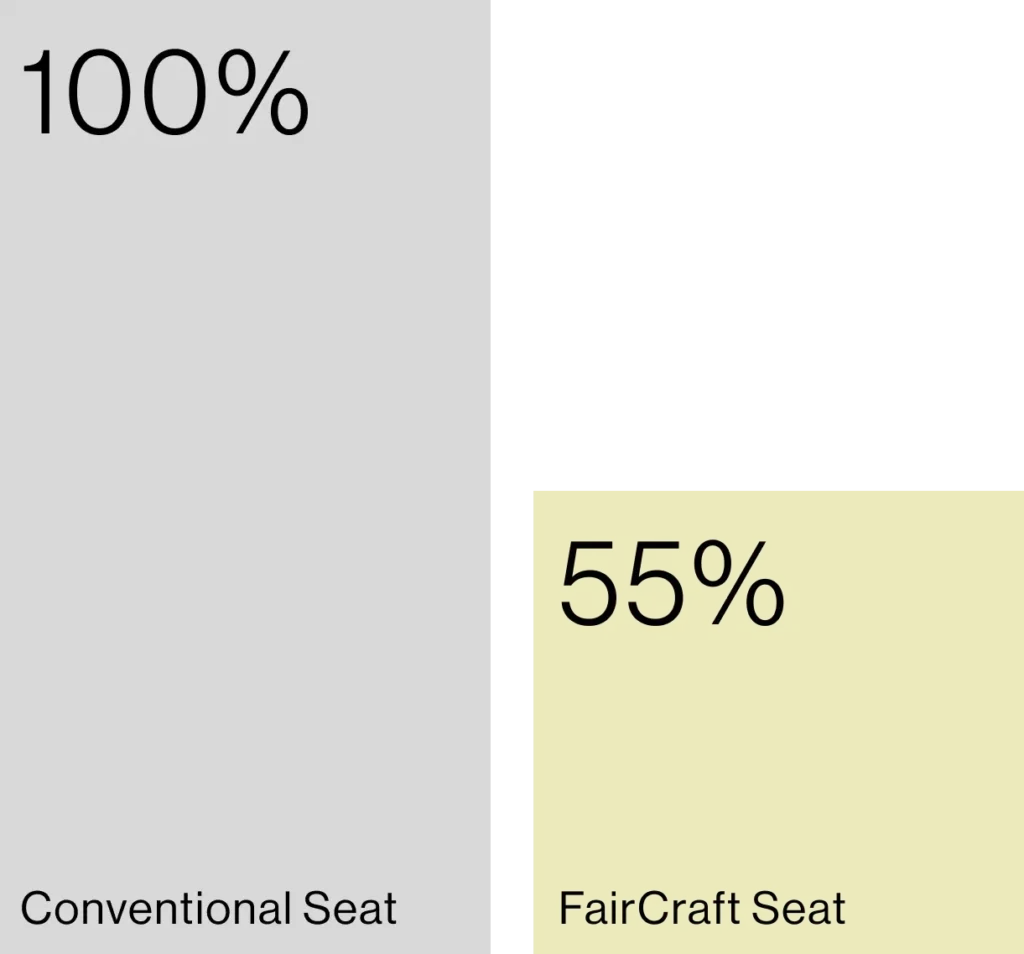
Climate Change Impact
In the current comparison, the FairCraft seat shows only 55% of the climate change impact of a conventional seat.
The materials used are selected for circular use from the outset. Textile components are designed so they can be separated and reused at the end of their service life, while structural elements are developed with recyclability and aviation requirements in mind. This approach combines lightweight construction with repairability, material recovery and reduced waste.
Fabric Cover
Made from Cradle to Cradle Certified and aviation-certified fabric.
Static Fabrics and Straps
A mono-material solution is being pursued here and is considered technically feasible.
Structural Parts
Potential solutions include recyclable thermoplastic composites with inherent FST-resistant properties, such as PESU, as well as aluminum.
Circular design helps tackle this challenge by combining resource responsibility with lightweight aviation.
Today, 99.5% of an aircraft’s CO2e emissions occur during operation. Reducing weight remains one of the industry’s key challenges, but material waste, toxicity, and end-of-life handling must also be addressed. Circular design expands the focus: it supports lightweight performance while also improving how aircraft interiors are made, used, and recovered.

 fabric.